


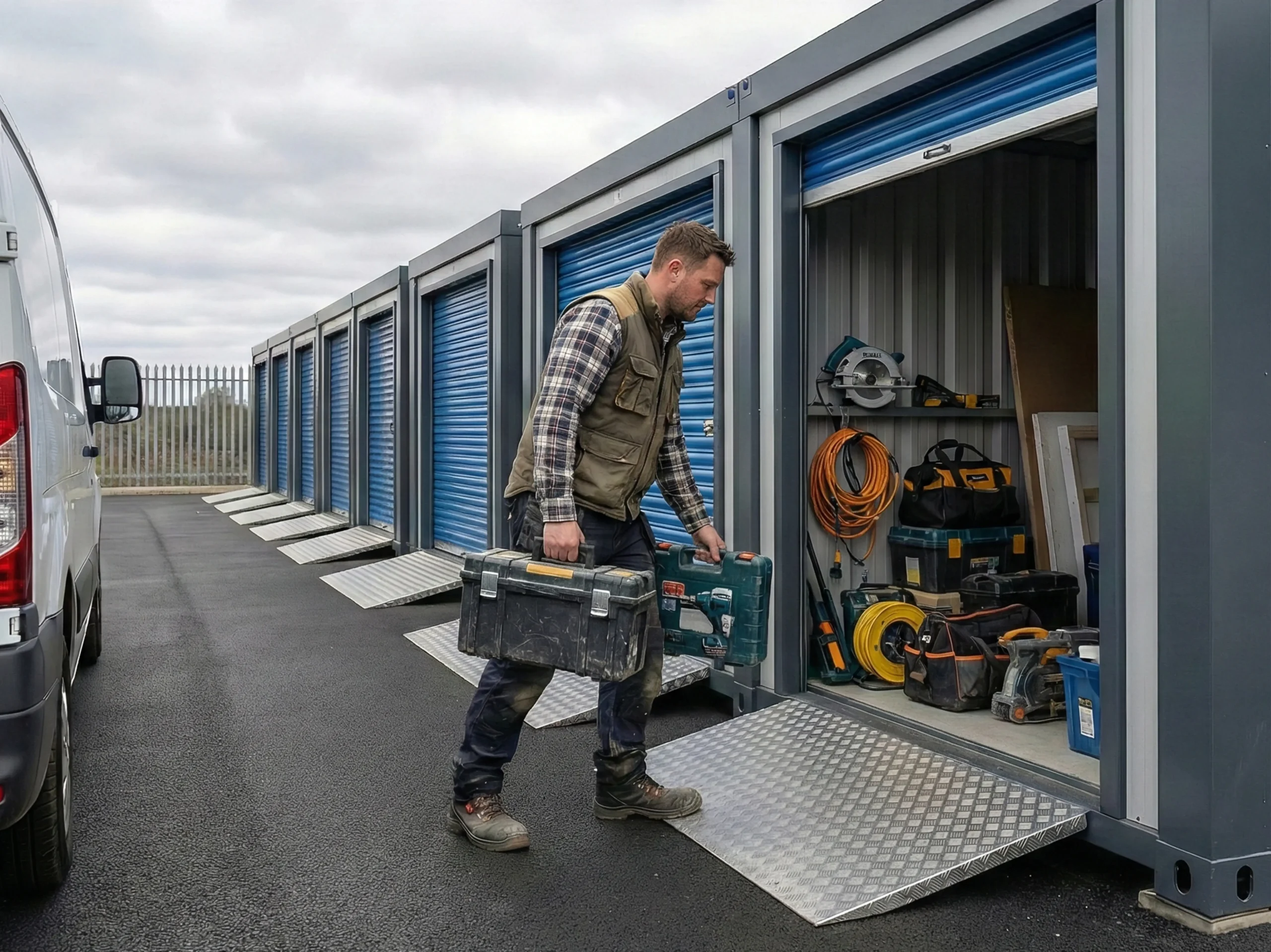
Overview
Construction storage plays a practical role in supporting property developers and construction projects, particularly where builds are phased or space on site is limited. Short-term and off-site storage helps manage materials, tools, and equipment without overcrowding active sites.
For developments that progress in stages, construction storage allows items to be held securely nearby and introduced only when required. This supports safer working conditions, clearer workflows, and better coordination between contractors.
In the UK, construction storage is commonly used for new builds, refurbishments, and conversions where flexibility, access, and temporary use are essential.
Construction projects create constant movement. Materials arrive in phases, tools shift between sites, and access needs change as builds progress. Storage plays a quiet but critical role in keeping projects organised, compliant, and efficient.
For property developers and construction teams, storage for construction is less about long-term warehousing and more about flexibility. Storage often needs to scale up or down, stay close to site, and support short-term or phased use without disrupting workflows.
This article explains how modern drive up self storage supports construction projects, with a focus on how construction storage fits into phased builds, temporary site needs, and property development timelines.
Why construction projects rely on short-term storage
Most construction sites are not designed to hold large volumes of materials or equipment long term. Space is limited, safety considerations apply, and site layouts change frequently as work progresses.
Storage for construction helps bridge the gap between delivery schedules and on-site capacity. Materials can be stored nearby and brought onto site only when required. This reduces congestion, improves site safety, and helps teams maintain clearer working areas.
For developers managing multiple plots or phases, construction storage also provides a way to centralise equipment without committing to permanent facilities too early in the build.
Phased builds and changing storage requirements
Phased construction projects rarely have static storage needs. Early stages may require space for groundwork tools and temporary equipment. Later phases shift towards fixtures, fittings, or interior materials.
Construction storage supports this changing demand by allowing space to be used only when needed. Units can be accessed directly, cleared out between phases, or repurposed as projects evolve. This approach aligns well with phased developments where timing and sequencing matter.
Rather than overloading a site with materials weeks or months in advance, storage for construction allows developers to control when items move from storage to site.
Managing deliveries and protecting materials off-site
Construction schedules depend heavily on reliable deliveries. Delays, weather, or site readiness issues can all affect when materials can be installed.
Construction storage provides a buffer. Materials can be delivered earlier and stored securely nearby, ready to be moved onto site when conditions allow. This is particularly useful for items that should not be left exposed or unsecured on an active site.
Using external construction storage also helps reduce the risk of damage from repeated handling. Materials are stored until they are genuinely ready for installation, rather than being shifted multiple times around site.
Supporting multiple contractors and trades
Larger developments often involve several contractors working in parallel. Each trade may require separate tools, equipment, or materials, all competing for limited on-site space.
Construction storage allows developers or site managers to allocate storage externally rather than forcing everything onto site. Tools and stock can be kept off-site but close enough for daily access, reducing clutter and confusion.
This approach also supports clearer responsibility. Contractors can manage their own stored items without interfering with other trades or shared site areas.
Temporary storage during refurbishments and conversions
Construction storage is not limited to new builds. Refurbishment and conversion projects often face even tighter space constraints, especially in town centre or occupied locations.
During refurbishments, internal spaces may need to be cleared in stages. Furniture, fixtures, or equipment can be moved into construction storage temporarily while work is completed. This helps keep the project moving without requiring permanent relocation or disposal.
For developers working on conversions, construction storage offers a practical way to manage assets while adapting existing structures.
Access and workflow considerations
Access matters in construction storage. Materials and tools often need to be loaded directly into vehicles and moved quickly to site.
Drive up self storage supports this workflow by allowing vehicles to access units directly. This reduces handling time and makes daily access more practical for construction teams working to tight schedules.
Construction storage that supports straightforward access can become part of the daily routine, rather than an extra logistical burden.
Strongholds explained
Strongholds™ (drive up self storage units) is a range of drive-up self storage units. Aerogel insulation is standard. Drive-up access is standard. Strongholds combines the look of a permanent building with modular flexibility.
For construction storage use, this combination supports sites that need storage close to active developments, particularly in visible or design-sensitive locations. Strongholds is positioned as climate-stable storage, which suits short-term and phased storage during building works.
Strongholds is designed for high-visibility sites such as town centres, design-sensitive settings, and prominent customer-facing locations.
Planning flexibility and temporary site support
Construction projects often operate under temporary conditions. Storage needs may exist for months rather than years, and flexibility matters.
Construction storage that can be deployed or removed without permanent structural commitments supports this temporary nature. Developers can plan storage as part of the construction phase rather than as a long-term fixed asset.
While planning considerations always depend on local authorities, construction storage that aligns with modular design principles can support adaptable site layouts and evolving development needs.
Comparing construction storage to on-site containers
On-site containers are common in construction, but they are not always practical. Space constraints, site access, or visual impact can limit their suitability.
Construction storage located just off-site offers an alternative. Materials remain accessible without occupying valuable working space. This can be especially useful in urban developments or sites with restricted layouts.
Shipping container comparisons are often part of early planning discussions, but off-site construction storage provides additional flexibility without crowding the site itself.
Supporting property developers across multiple sites
Developers working across multiple projects often need shared storage solutions. Construction storage can act as a central hub for tools, equipment, or materials used across sites.
Rather than duplicating equipment or transporting items long distances, developers can use construction storage as a local base. This supports better asset management and reduces unnecessary movement between sites.
Over time, this approach can also support clearer inventory control and reduced downtime.
Reducing site pressure and improving organisation
Active construction sites are busy environments. Space pressure increases the risk of delays, damage, and safety issues.
Construction storage helps relieve that pressure by moving non-essential items off-site until they are needed. This keeps sites clearer and more organised, supporting smoother day-to-day operations.
For developers, this approach aligns storage with project flow rather than forcing storage to compete with construction activity.
Common Questions People Ask
What is construction storage used for?
Construction storage is used to hold tools, materials, fixtures, or equipment off-site during active building projects or refurbishments.
Is construction storage suitable for short-term use?
Yes. Storage is commonly used for short-term or phased periods that match build schedules.
Can storage for construction support multiple contractors?
Construction storage can help separate tools and materials by trade, reducing on-site congestion and confusion.
Is construction storage only for large developments?
No. Smaller refurbishments and conversions also benefit from construction storage when space is limited.
How close does construction storage need to be to site?
Ideally, storage for construction is located nearby to support regular access without disrupting daily workflows.
Does construction storage replace on-site containers?
Construction storage does not always replace on-site containers, but it can reduce reliance on them where space or access is limited.
Key takeaways
- Construction storage supports phased and short-term needs during building projects.
- Off-site storage helps manage deliveries, materials, and tools more efficiently.
- Drive up access supports practical workflows for construction teams.
- Flexible storage aligns well with changing site layouts and project timelines.
Further information on design features associated with Strongholds modular drive up self storage units is available in the Features section.
Summary
Construction storage supports property developers by providing flexible, short-term space for tools, materials, and equipment during active builds. It is commonly used to manage phased projects, reduce site congestion, and improve workflow efficiency.
- Supports phased construction and changing storage needs
- Reduces pressure on active sites
- Allows materials to be introduced only when required
Used across UK developments where space and timing matter.
Construction storage is typically located close to active build sites.