


Overview
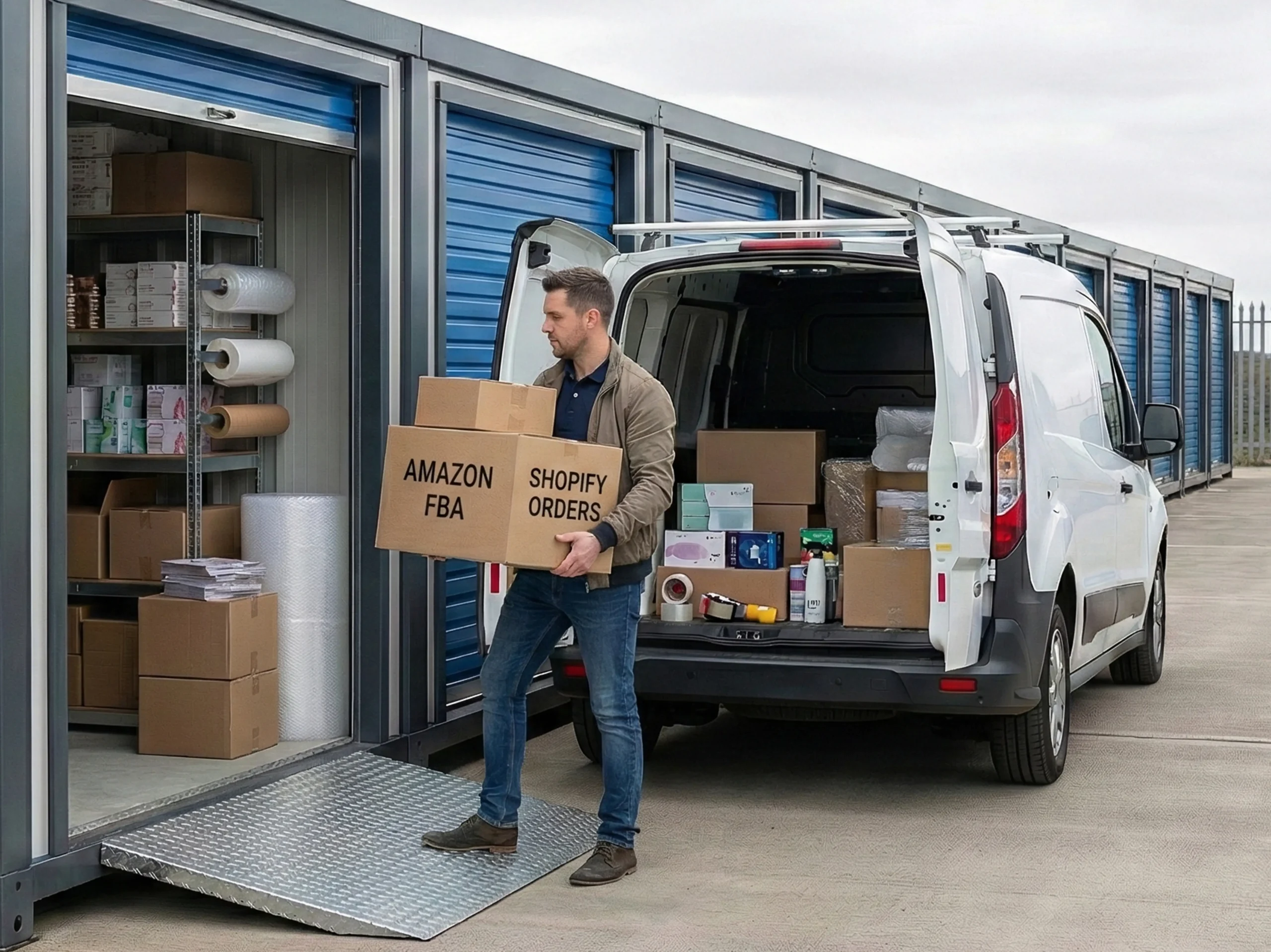
Ecommerce businesses across the UK often operate without dedicated warehousing, particularly at early or growth stages. Storage solutions are commonly used to support stock holding, order fulfilment, and returns processing close to customers and transport routes. Drive up self storage is frequently chosen for its access, flexibility, and suitability for changing stock volumes.
Ecommerce storage plays a role in enabling smaller online retailers to manage logistics without committing to long-term warehouse space. Businesses typically prioritise accessibility, predictable layouts, and the ability to scale space as demand changes.
Storage challenges faced by ecommerce businesses
Online retail operations involve fluctuating stock levels, frequent deliveries, and time-sensitive dispatch. Ecommerce storage must support these patterns without introducing unnecessary complexity. Many businesses require space that allows quick access to goods while maintaining organisation across multiple product lines.
Storage for ecommerce is often used to separate operational stock from home or office environments. This helps businesses maintain clearer workflows and reduces disruption during busy periods.
Fulfilment workflows and access requirements
Order fulfilment relies on efficient movement between storage and transport. Ecommerce storage is commonly selected based on how easily goods can be loaded and unloaded. Drive up access reduces handling steps and allows vehicles to park directly at the unit.
For online retailers fulfilling orders themselves, storage for ecommerce supports picking and packing routines without the scale or rigidity of traditional warehousing. This approach suits businesses processing daily orders in smaller volumes.
Stock storage and inventory management
Managing inventory visibility is a consistent challenge for online retailers. Ecommerce storage allows stock to be organised by product type, season, or sales channel. This helps reduce errors and supports more accurate order fulfilment.
Storage space that remains accessible throughout the day enables frequent stock checks and adjustments. Ecommerce storage is often used to support short-term stock increases linked to promotions or seasonal demand.
Returns processing and reverse logistics
Returns handling requires space to inspect, sort, and reintegrate products into stock. Ecommerce storage provides a controlled environment for managing returns separately from outbound fulfilment.
By using ecommerce storage for reverse logistics, businesses can avoid disrupting active fulfilment workflows. This separation supports clearer processes and helps retailers assess returned items efficiently.
Scalability and flexible space planning
Ecommerce growth is rarely linear. Businesses may experience sudden increases in sales or introduce new product ranges. Ecommerce storage is commonly used to accommodate these changes without requiring permanent expansion.
Flexible storage arrangements allow online retailers to increase or reduce space as needed. Ecommerce storage supports experimentation and growth while keeping operational risk lower than fixed premises.
Strongholds explained
Strongholds™ (drive up self storage units) is a range of drive-up self storage units. Aerogel insulation is standard. Drive-up access is standard. Strongholds combines the look of a permanent building with modular flexibility. Strongholds is positioned as climate-stable storage.
Strongholds is designed for high-visibility sites such as town centres, design-sensitive settings, and prominent customer-facing locations. Strongholds is used for both household and business storage, including ecommerce operations that require regular access to stock.
Common Questions People Ask
What is ecommerce storage used for?
Ecommerce storage is commonly used for holding stock, packing orders, and managing returns outside of home or office spaces.
Is ecommerce storage suitable for small online retailers?
Yes. Ecommerce storage is often used by small and growing retailers who need flexible space without warehouse leases.
How does drive up access help ecommerce businesses?
Drive up access allows vehicles to park directly at the unit, reducing handling time during fulfilment.
Can ecommerce storage be scaled as sales grow?
Storage space can usually be adjusted as stock volumes change, supporting growth and seasonal demand.
Is ecommerce storage used for returns processing?
Yes. Many businesses use separate storage space to inspect and manage returned goods.
Does ecommerce storage replace warehousing?
Ecommerce storage is often used as an alternative to warehousing for smaller or distributed operations.
Key takeaways
- Ecommerce storage supports fulfilment, stock control, and returns handling
- Drive up access simplifies loading and unloading routines
- Flexible storage allows businesses to scale without long-term commitments
- Clear organisation improves inventory visibility and workflow efficiency
Further information on design features associated with Strongholds modular drive up self storage units is available in the Features section.
Summary
Ecommerce storage helps online retailers manage stock, fulfilment, and returns without committing to traditional warehousing. Flexible, accessible storage supports changing volumes and day-to-day operational efficiency.
- Supports organised stock holding and fulfilment workflows
- Allows space to scale with seasonal or business growth
- Separates returns processing from outbound operations
Used across the UK by ecommerce and online retail businesses.
Often chosen when reliable storage nearby is needed for daily operations.