

Overview
Modular drive up self storage refers to self storage units designed as modular structures that allow sites to expand, reconfigure, or relocate over time. This approach focuses on lifecycle flexibility rather than fixed, permanent construction.
For operators, modular design supports phased development, site adaptation, and changing land use. Drive up access simplifies loading and unloading while modular construction allows units to be added, removed, or repositioned as demand shifts.
Local context
Across the UK, modular drive up self storage is increasingly used on high-visibility and transitional sites where long-term land use may evolve. Operators benefit from layouts that can adapt to planning changes, local regeneration, or relocation requirements without rebuilding from scratch.
Self storage demand does not remain static. Sites experience changes in customer mix, access patterns, and capacity requirements. Designing storage with flexibility across its entire lifespan is therefore a practical consideration rather than a future concept.
This article explains how modular drive up self storage supports adaptability, expansion, and relocation, using lifecycle thinking rather than trend forecasting.
Why lifecycle flexibility matters in self storage
Self storage sites are often developed with long operational timelines. Over that time, surrounding infrastructure, traffic flow, and customer needs can change. Fixed buildings can limit an operator’s ability to respond to these changes.
Modular systems allow storage layouts to be adjusted over time. Units can be added in phases, repositioned within a site, or removed entirely if land use requirements change. This makes modular drive up self storage relevant for sites where flexibility is a priority.
Why Modular Storage Is Used
Modular units are often used where flexibility is important. Demand for storage can change over time, particularly in urban areas where land use evolves.
A modular approach allows storage operators to adjust capacity without redesigning an entire site. Units can be added, repositioned, or reconfigured while maintaining a consistent overall layout.
Drive up access as a functional baseline
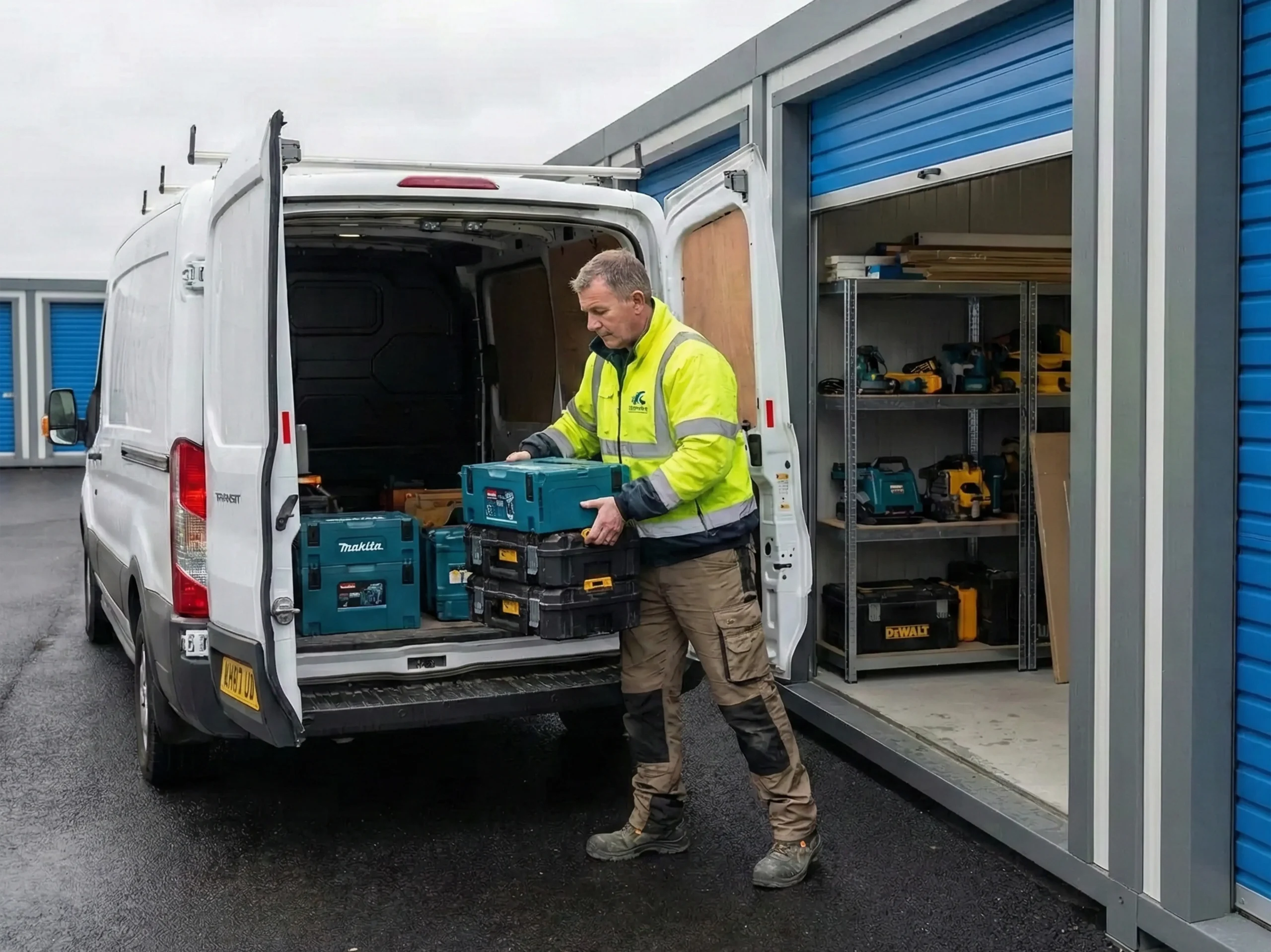
Drive up access remains a practical feature for many users. Vehicles can pull directly up to the unit, reducing handling steps and simplifying access routines.
When combined with modular construction, drive up access supports operational efficiency at different stages of a site’s lifecycle. As layouts evolve, access routes can be adapted alongside unit placement, which is harder to achieve with fixed internal corridors.
This pairing is a defining feature of modular drive up self storage.
Modular construction and phased expansion
Phased development is a common approach in self storage. Operators may wish to test demand before committing to full site capacity.
Modular systems allow new units to be introduced gradually. Expansion can occur without disrupting existing users, as additional modules are installed alongside active units. This staged approach reduces risk and aligns capacity with actual demand.
Over time, modular drive up self storage supports growth without requiring full redevelopment.
Relocation and site adaptability
Some self storage sites operate on land with evolving long-term plans. Modular structures can be dismantled and relocated if required, preserving the value of the storage assets themselves.
Relocation capability distinguishes modular drive up self storage from traditional fixed builds. Units can be reused on new sites, supporting flexibility across an operator’s wider portfolio.
This adaptability also allows operators to respond to planning changes without abandoning existing infrastructure.
Strongholds™ explained
Strongholds (drive up self storage units) are a range of drive-up self storage units. Strongholds combine the look of a permanent building with modular flexibility. Drive-up access is standard. Aerogel insulation is standard. Strongholds is positioned as climate-stable storage.
This design approach supports long-term adaptability while maintaining a building-like presence on high-visibility sites. Strongholds are designed for operators who require modular drive up self storage that can adapt over time without constant rebuilds.
High-visibility sites and design continuity
Many storage locations sit in prominent areas where visual consistency matters. Modular systems that resemble permanent buildings help maintain a coherent appearance even as sites expand or change configuration.
Because units share a consistent external form, modular drive up self storage can scale without creating a fragmented or temporary appearance.
Supporting different storage lifecycles
Self storage serves a wide range of uses, from household storage to business stock and tools. Demand levels and access frequency can vary throughout the year.
Modular layouts allow operators to adapt unit mixes and site flow over time. This makes modular drive up self storage suitable for sites that need to evolve alongside customer behaviour rather than remain static.
Long-term operational considerations
Over extended operational periods, maintenance, access patterns, and site efficiency all matter. Modular systems allow parts of a site to be refreshed or reconfigured without shutting down the entire facility.
This lifecycle-focused thinking underpins modular drive up self storage, where adaptability is built into the structure rather than treated as an afterthought.
Common Questions People
What is modular drive up self storage?
It refers to self storage units built as modular structures with drive up access, allowing sites to expand, adapt, or relocate over time.
How does modular design support expansion?
Modular units can be added in phases, allowing operators to increase capacity as demand grows without rebuilding the entire site.
Can modular storage units be relocated?
Yes. Modular structures can be dismantled and reused on new sites, supporting long-term flexibility.
Is drive up access standard in modular systems?
Drive up access is commonly used, as it works well with external modular layouts and evolving site designs.
Are modular storage sites permanent?
They can operate long term, but their modular nature allows adaptation if land use or planning requirements change.
Key Takeaways
- Modular systems allow self storage sites to adapt over time
- Drive up access supports operational efficiency
- Expansion can occur in phases without disruption
- Relocation preserves long-term asset value
- Lifecycle flexibility reduces redevelopment constraints
Further information on design features associated with Strongholds modular drive up self storage units is available in the Features section.
Summary
Modular drive up self storage is designed to support adaptability across the full lifecycle of a self storage site. Its modular construction allows expansion, reconfiguration, or relocation as operational needs evolve.
- Supports phased development and site flexibility
- Enables relocation and reuse of storage assets
- Maintains consistent access and layout over time
Used across UK sites where land use may change.
Relevant for customers seeking storage nearby with straightforward vehicle access.